QA Engineer hero image

Generate Mobile Tests in Claude - From a Single Prompt

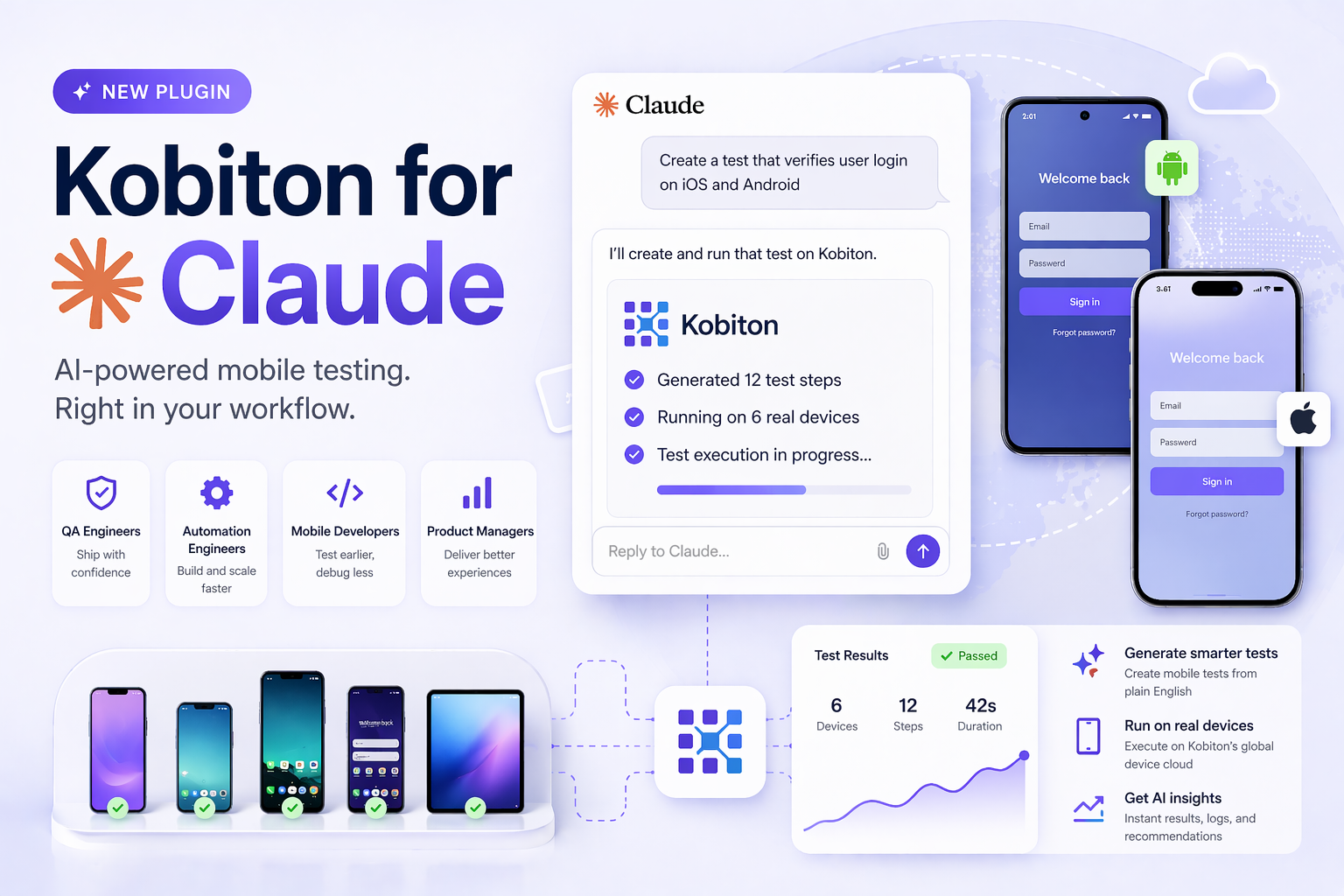
Use natural language to create, debug, and scale mobile tests with Kobiton’s Claude integration.

How it Works

Three steps - all inside your IDE.

Skip Appium Script Writing

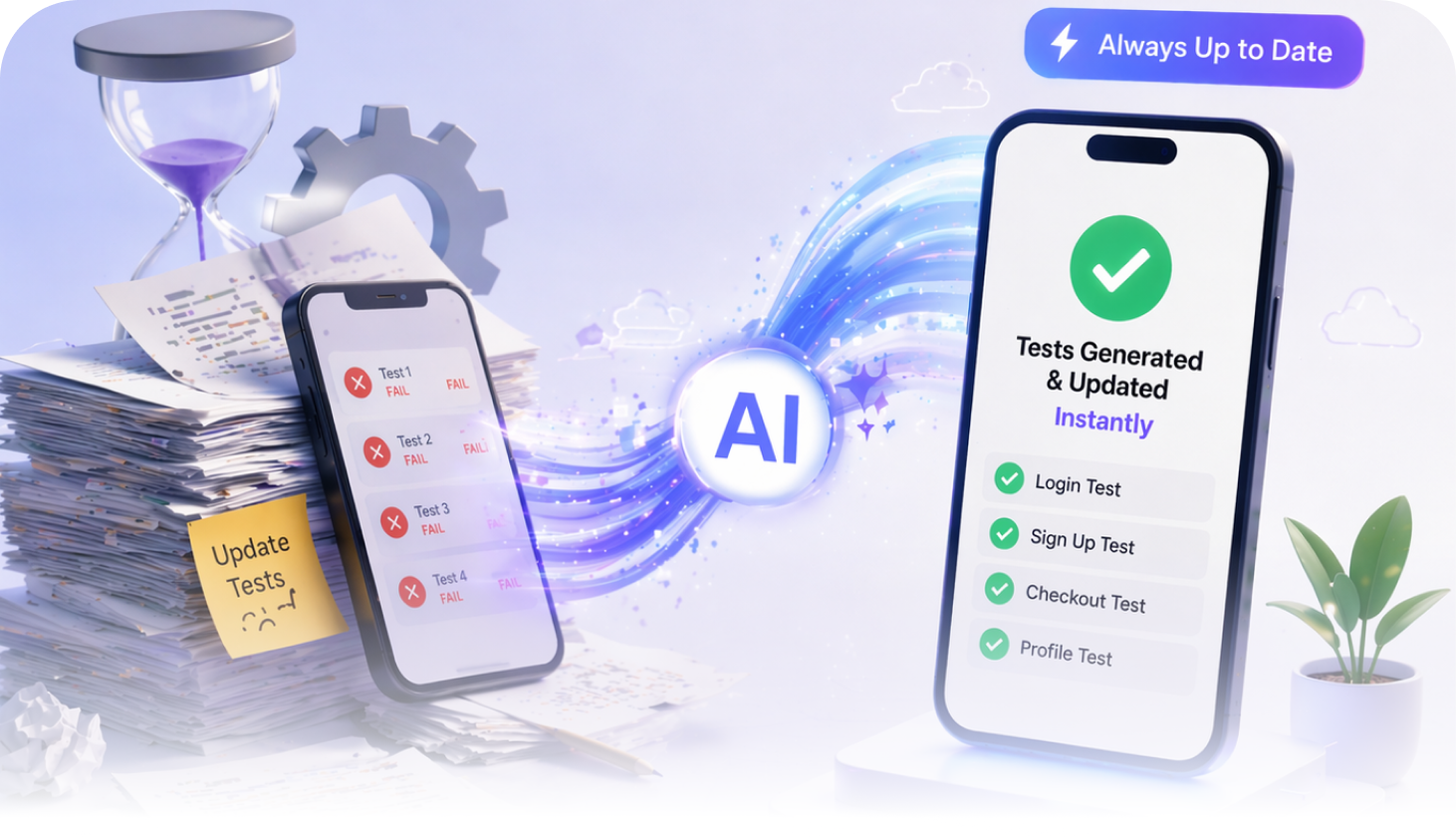
AI generate and updates Appium scripts so you don't have to write or maintain them.

Why this matters
Prompt. Test. Ship.

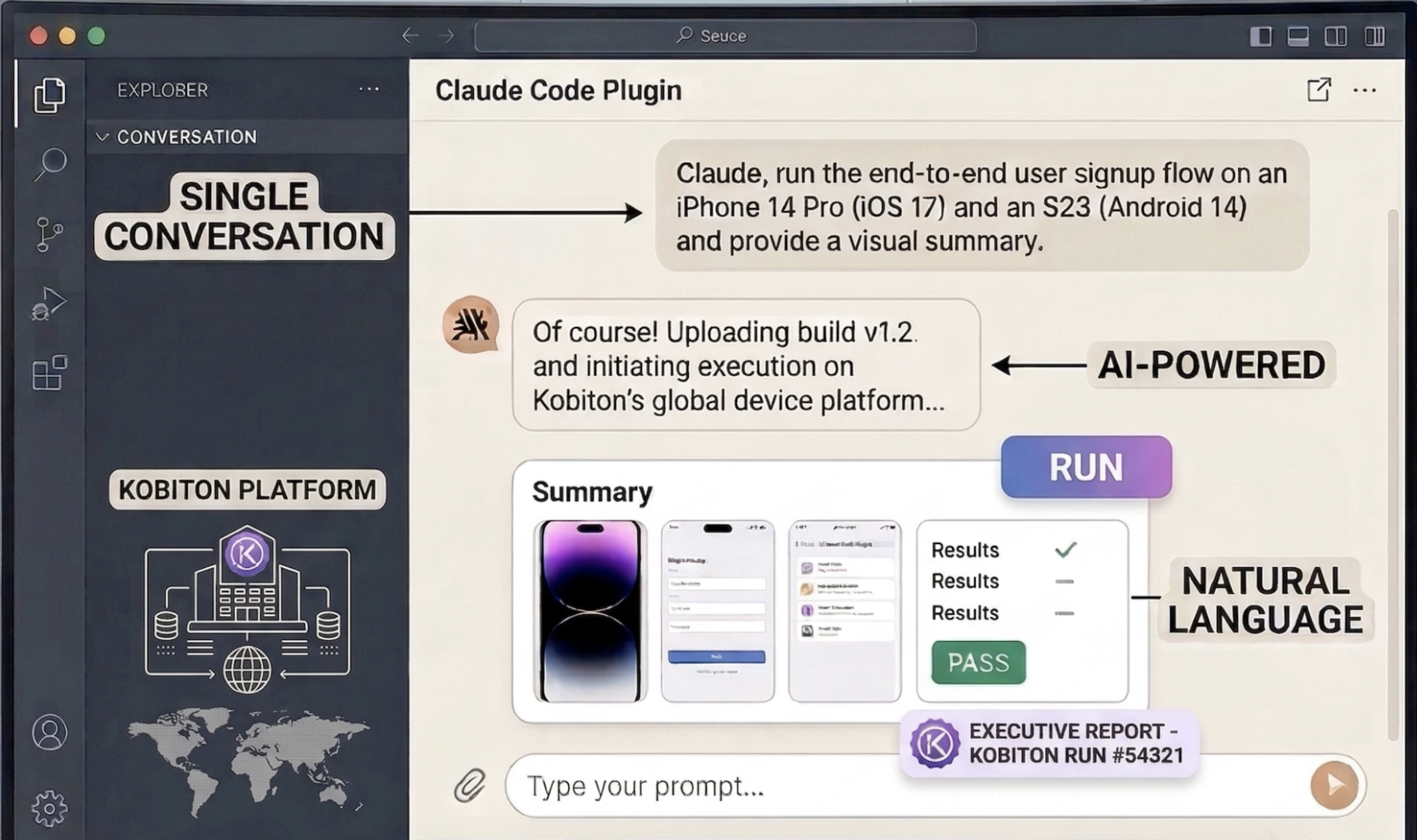
Describe a test in plain English. Get the Appium script back. Run it on real devices.

What you can do
No New Tools

Lives inside Claude. No new tools, no context switch.

How it fits your workflow

Key Benefits

Generate Appium scripts from prompts
Get intelligent suggestions and fixes
AI auto-debugs your failing tests
Automate workflows with natural language
Scale testing without writing more code
Benefits right image

Discover the Benefits of Mobile Testing in Claude

See a prompt become a real-device test (5 min)

Get Started

Install the plugin

In Claude Code, run:

/plugin marketplace add kobiton/automate
/plugin install automate@kobiton
Authenticate

You can authenticate using OAuth or an API key.

OAuth (recommended)

When you first use the plugin, a browser window opens. Sign in with your Kobiton credentials. Claude stores tokens automatically.

API key

Generate an API key in Kobiton Portal > Settings > API Keys. Then set:

export KOBITON_AUTH="Basic $(echo -n 'username:api-key' | base64)"

Update .mcp.json to include the Authorization header.

OAuth and API key authentication cannot be used together. Use one method at a time.

NOTE
Run a command

Use natural language to interact with Kobiton:
Show available Android devices

Upload app.apk and run tests/smoke_test.js

Show results for session 12345

For more information on the Kobiton plugin, visit our documentation .

Start building mobile tests with AI today

Install our Plugin